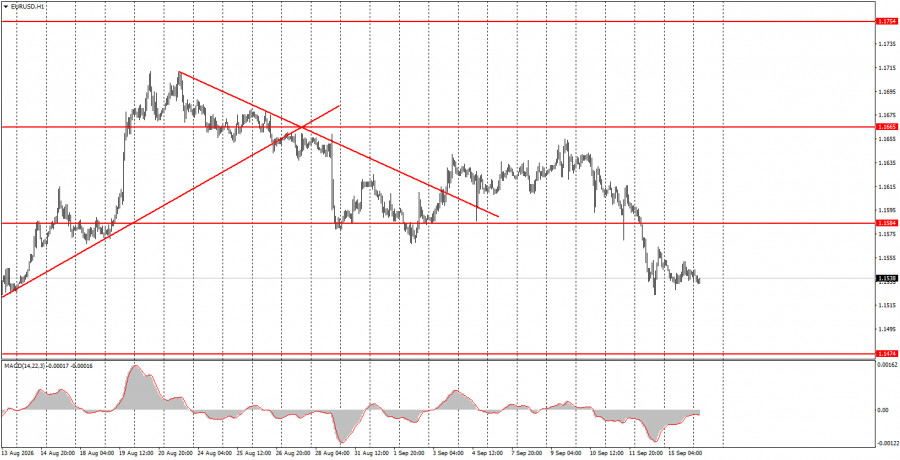
Few macroeconomic reports are scheduled for Thursday, and none are particularly important. In the euro area, the second-estimate August inflation report will be released today, and in the US, reports on building permits and housing starts are due. We do not expect these releases to receive much attention, as the market will most likely still be digesting the Federal Reserve meeting outcomes. In addition, the Bank of England meeting takes place today and could trigger a new bout of market volatility. So it will not be a boring day, and macroeconomic data will not be the primary focus.
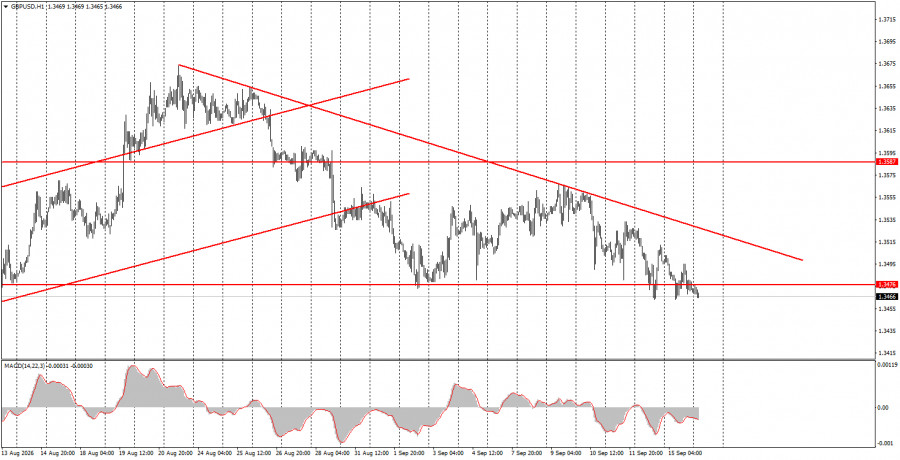
Among Thursday's fundamental events, the BoE meeting stands out. The tone and nature of BoE decisions may be somewhat more hawkish than at past meetings, which could offer limited support to sterling. However, even neutral results may now provoke another pound sell-off. Yesterday the Fed not only tightened policy but effectively signaled further tightening "until victory over inflation." No one expects the BoE to raise the key rate in September.
The geopolitical backdrop remains poor. The US and Iran are not conducting negotiations; the Strait of Hormuz remains closed or partially closed; Iran-backed Houthi forces maintain a blockade of Saudi Arabia and continue to attack its facilities. Donald Trump has proposed an unprecedented economic operation to "destroy" Iran and threatened sanctions on any countries that interact with it. So far, no one has backed Trump's plan to destroy Iran, and whether it will be implemented is unknown. The conflict persists, the Bab al-Mandeb Strait is under threat of blockade, and oil prices are rising.
On the penultimate trading day of the week, currency pairs will likely be under pressure again. The euro can be traded today from the 1.1461–1.1474 area, and the pound from the 1.3380–1.3386 area. The euro and the pound may try to recover somewhat today, but weak or inconclusive BoE results could trigger a new wave of selling.
Price levels (areas) of support and resistance serve as targets for opening buy or sell trades or as sources of signals.
Red lines indicate channels or trend lines that show the current trend and the preferred trading direction.
The MACD indicator (14,22,3) — the histogram and signal line — is an auxiliary indicator that can also provide signals.
Important speeches and reports (listed in the news calendar) can significantly influence currency pair movements. Therefore, during their release, traders should approach trading with utmost caution, or exit the market to avoid sudden reversals against the preceding move.
Beginner forex traders should remember that not every trade can be profitable. Developing a clear strategy and practicing money management are key to long-term success in trading.

QUICK LINKS
ForexMart is authorized and regulated in various jurisdictions.
(Reg No.23071, IBC 2015) with a registered office at First Floor, SVG Teachers Co-operative Credit Union Limited Uptown Building, Corner of James and Middle Street, Kingstown, Saint Vincent and the Grenadines
Restricted Regions: the United States of America, North Korea, Sudan, Syria and some other regions.


 Contact Us