
Today, Monday, gold is holding above the psychological $5,000 level. A combination of supportive factors calls for caution among aggressive sellers. A modest rise in the U.S. dollar index, together with generally positive risk sentiment, is exerting some downward pressure on the precious metal.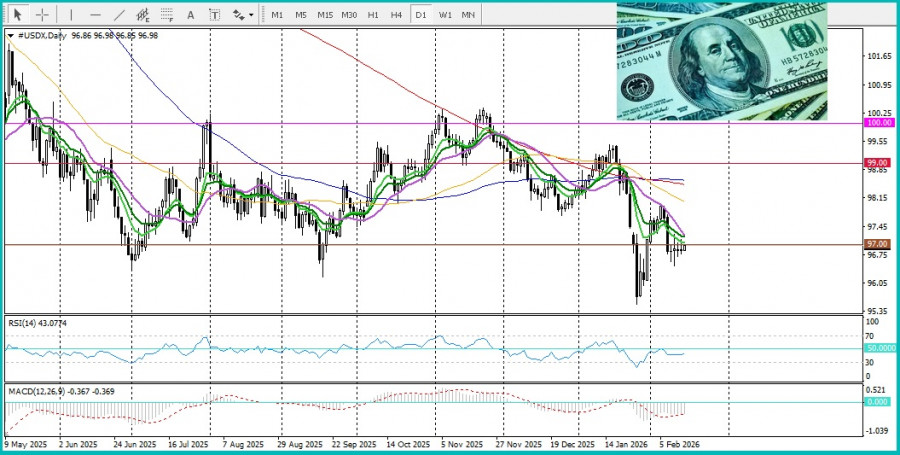 Nevertheless, geopolitical tensions remain elevated ahead of the second round of U.S.–Iran nuclear talks scheduled for this week. In particular, the United States has deployed a second aircraft carrier to the region and is preparing for the possibility of a prolonged military operation if dialogue fails. Iran's Revolutionary Guard has stated it is ready to strike any U.S. base in response to aggression on its territory. Such circumstances could provide additional upward momentum for gold prices.
At the same time, a sharp strengthening of the U.S. dollar appears unlikely amid expectations of a dovish Federal Reserve policy, which traditionally supports precious metals. Ignoring last Wednesday's weak U.S. nonfarm payrolls (NFP) report, market participants focused on disappointing consumer inflation data released on Friday, increasing expectations of a Fed rate cut in June. The headline U.S. Consumer Price Index (CPI) rose by 0.2% and the core CPI by 0.3% last month, reinforcing arguments for further Fed easing and potentially limiting declines in gold prices. Low trading volumes due to the U.S. Presidents' Day holiday are also restricting speculators from taking large directional positions in XAU/USD.
Statements from Federal Reserve officials may still support the U.S. dollar and commodity assets. This week, attention should be focused on the FOMC meeting minutes on Wednesday as a source of clues regarding the pace of Fed rate cuts. In addition, global PMI data on Friday may offer trading opportunities in the second half of the week.
From a technical perspective, the failure to sustain Friday's momentum above the 100-period simple moving average (SMA) on the hourly chart leaves the advantage with sellers. Prices remain below this SMA, limiting upside potential and maintaining a bearish intraday bias.
The MACD histogram is moving below the signal line within neutral territory. If it drops below zero, bearish influence will intensify. The Relative Strength Index (RSI) is hovering near neutral levels with a downward slope, also favoring the bears. Downward pressure is likely to persist as long as XAU/USD remains below the 100-period SMA on the hourly chart.
A recovery will only become possible if the MACD crosses above the signal line and the RSI moves back above 50 with an upward bias, as such a configuration would weaken bearish pressure and open the way for further gains.

QUICK LINKS
ForexMart is authorized and regulated in various jurisdictions.
(Reg No.23071, IBC 2015) with a registered office at First Floor, SVG Teachers Co-operative Credit Union Limited Uptown Building, Corner of James and Middle Street, Kingstown, Saint Vincent and the Grenadines
Restricted Regions: the United States of America, North Korea, Sudan, Syria and some other regions.


 Contact Us