Šéf banky Jamie Dimon, který kdysi označil bitcoin za „podvod“, zmírnil svůj tón.
Největší americká banka JPMorgan Chase [JPM] zvažuje zásadní krok, který by ještě před několika lety vypadal jako nepředstavitelný. Podle informací obeznámených se situací banka analyzuje možnost poskytování úvěrů krytých kryptoměnami, jako je bitcoin [BTC] nebo ethereum [ETH]. Tento plán, pokud se naplní, by znamenal výrazný posun v přístupu banky i jejího generálního ředitele Jamieho Dimona ke kryptoměnovému sektoru, který dlouho považovali za rizikový a nevěrohodný.
Ještě před osmi lety se Jamie Dimon vyjadřoval vůči kryptoměnám velmi kriticky. Bitcoin označil za „podvod“, který prý „nakonec vybuchne“, a dodal, že je vhodný jen pro drogové dealery a vrahy. Dokonce tehdy prohlásil, že propustí každého obchodníka, který s bitcoinem obchoduje. Taková slova z úst šéfa jedné z největších světových bank měla značný vliv – a podle zdrojů z bankovního prostředí odradila řadu potenciálních klientů, kteří byli v kryptosvětě aktivní.
Postupem času však došlo k výraznému posunu v rétorice. V nedávném vyjádření Dimon přirovnal svůj postoj k právu kouřit: „Nemyslím si, že byste měli kouřit, ale bráním vaše právo kouřit. Bráním vaše právo kupovat bitcoiny. Do toho.“ Tento postoj ukazuje na pragmatičtější přístup – JPMorgan sice není nadšeným propagátorem kryptoměn, ale připouští jejich místo na finanční scéně.
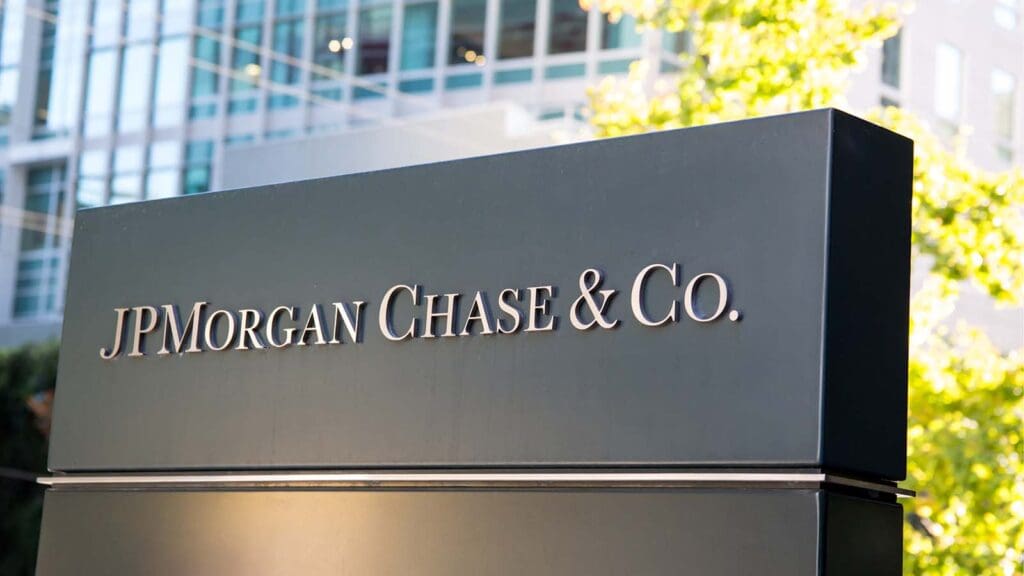
JPMorgan již podnikla první kroky směrem k využití kryptoměn v úvěrové praxi. Banka plánuje poskytovat úvěry kryté podíly v burzovně obchodovaných fondech (ETF), které drží kryptoměny. To je významné zejména proto, že tyto fondy jsou regulované a transparentní, což z nich činí přijatelnější kolaterál pro tradiční bankovní instituce.
Nyní však JPMorgan zvažuje i přímé úvěry kryté skutečnými kryptoměnami, jako je bitcoin. Pokud by se tento krok uskutečnil, šlo by o zásadní průlom ve vztahu mezi klasickým bankovním světem a decentralizovaným finančním prostředím. Přestože zatím nebylo nic oficiálně potvrzeno, podle zdrojů by se první takové úvěry mohly objevit už v příštím roce. Konečné rozhodnutí však závisí na dalším vývoji situace, včetně technologických a regulatorních aspektů.
Technickým oříškem zůstává otázka, jak naložit s kryptoměnami v případě nesplácení úvěru. Jelikož JPMorgan kryptoměny neeviduje ve své rozvaze, nejpravděpodobnějším řešením by bylo zapojení třetí strany, která by digitální aktiva spravovala jménem banky. Takovou službu by mohla poskytovat například Coinbase, přední americká kryptoměnová burza a custody platforma.
Důležitou roli v celé záležitosti hraje i měnící se postoj amerických úřadů. Druhá administrativa prezidenta Donalda Trumpa přistupuje ke kryptoměnám s větší vstřícností než předchozí vláda Joea Bidena. Tento posun v regulaci povzbudil mnoho tradičních finančních institucí ke vstupu do kryptosvěta. Příkladem může být Morgan Stanley, který zvažuje nabídnout obchodování s kryptoměnami prostřednictvím své platformy E*Trade.
K dalšímu průlomu došlo minulý týden, kdy Sněmovna reprezentantů schválila zákon o regulaci stablecoinů. Jde o vůbec první zásadní legislativní rámec pro kryptoměny schválený Kongresem. Banky tento krok vítají, protože by mohl zjednodušit zapojení do obchodování s digitálními aktivy, které jsou vázány na tradiční měny. Na rozdíl od bitcoinu, který nemá žádný podklad, jsou stablecoiny navázány například na americký dolar, což je činí stabilnějšími a přijatelnějšími pro banky.
I přesto zůstává regulatorní otázka složitá. Finanční instituce se obávají, že kryptoměny mohou být zneužívány k praní špinavých peněz a dalším nezákonným aktivitám. To klade důraz na dodržování předpisů a schopnost bank zajistit, že jejich klienti využívají digitální aktiva v souladu se zákonem.
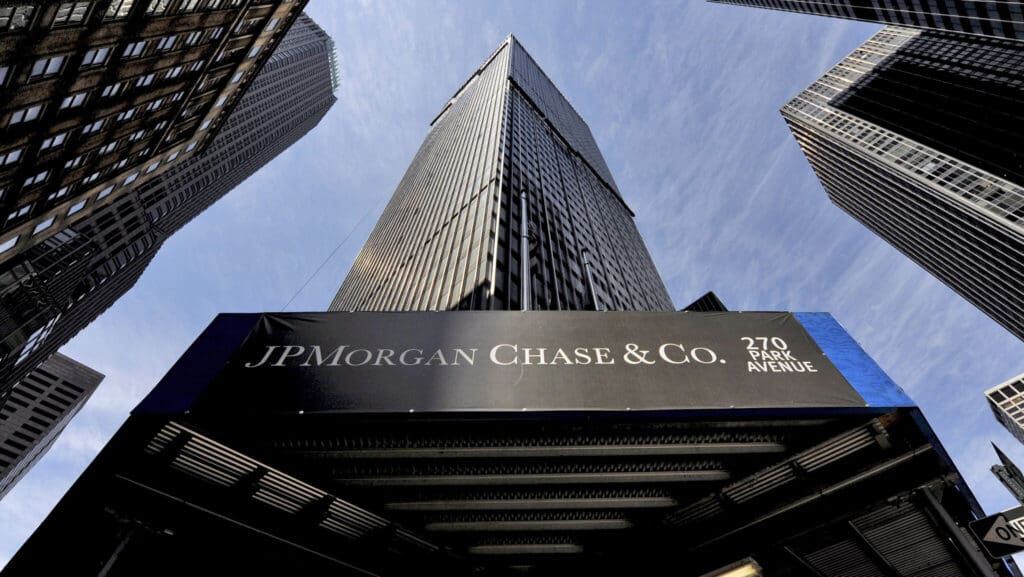
Ačkoliv JPMorgan dosud přistupovala ke kryptoměnám obezřetně, v oblasti digitálních aktiv není pasivní. Již v roce 2019 banka vytvořila vlastní digitální měnu – JPM Coin, kterou používá pro mezibankovní převody v rámci své sítě. Tato iniciativa byla jednou z prvních svého druhu mezi velkými bankami a ukazuje, že JPMorgan sleduje dlouhodobý strategický vývoj v digitálních financích.
Plány na poskytování úvěrů krytých kryptoměnami by tak nebyly úplně vybočením ze stávajícího trendu, ale spíše dalším krokem na cestě, kterou si banka postupně razí. Přes dřívější skepticismy a veřejné útoky na bitcoin se ukazuje, že vývoj v sektoru kryptoměn si získává uznání i mezi nejkonzervativnějšími hráči.
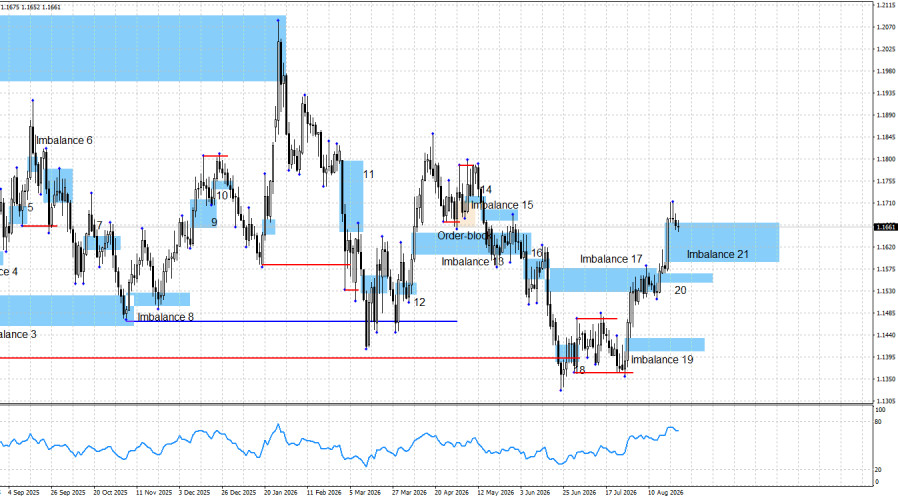
EUR/USD continues to rise, following the two liquidity sweeps marked by red lines on the chart. Imbalance 17 contained the bulls' advance for a long time and was eventually fully invalidated. Two new imbalances, 20 and 21, were also formed last week. Both are bullish. The nearest imbalance could lead to the formation of a signal at any point this week. Imbalance 21 is approximately 80 points wide, which is quite substantial given traders' activity in recent weeks. Therefore, the price could enter Imbalance 21 and remain there for a considerable amount of time. It could even decline to 1.1589 before beginning a new rise and forming a bullish signal. In any case, market sentiment remains bullish, which means that traders should be looking for buy signals.
In my view, the fundamental backdrop continues to fully support the bulls. First, any chart clearly shows that the euro began its rise from relatively low levels compared with the average price over the past year. Second, the market is no longer expecting FOMC monetary policy tightening in September. Third, the market has begun to question whether the Fed under Kevin Warsh can tighten monetary policy at all. Fourth, U.S. economic data has recently been disappointing. Fifth, geopolitics is no longer supporting the bears or the dollar. Sixth, the ECB may tighten monetary policy once again this autumn. Seventh, the U.S. Treasury Department has decided to increase its purchases of long-term bonds, reducing demand for the dollar. Eighth, a new trade war between the United States and Canada, as well as between the United States and China, could begin in the near future. Therefore, I see no reason for a bearish advance.
As I warned in recent weeks, if the labor market once again shows a weak result, this would be a sufficiently strong reason for the Fed to refrain from raising rates. At present, the state of the U.S. labor market is one of the key reasons for the dollar's decline, as it severely constrains the Fed's ability to tighten monetary policy. The annual Nonfarm Payrolls report will be released on Friday. If it comes in below forecasts, this will provide another reason for the U.S. currency to decline.
I would like to remind you that expectations regarding Fed monetary policy are always just expectations and can change in response to geopolitical developments or economic data. The market may anticipate monetary easing or tightening and price these expectations in, as we saw between June 17 and June 24. However, this does not mean that those expectations will materialize. The latest U.S. labor market data showed weak figures, inflation slowed, and GDP growth decelerated. These three factors have raised doubts about FOMC rate hikes not only in September but also in the foreseeable future. In my view, the bears' only opportunity now lies in a new escalation in the Middle East. However, Donald Trump is not seeking military escalation. He now wants to pressure Iran through economic measures.
The current chart structure points to a continuation of the bullish momentum as the more likely scenario. The bearish Imbalance 17 was tested, but the reaction to it was weak, and the pattern is now invalidated. The bullish Imbalance 19 remains untested. The new bullish Imbalance 20 also failed to provide traders with a buy signal. Another bullish Imbalance 21 has formed and could generate a signal this week. At present, the bulls have a much stronger position and better prospects than the bears.
The economic backdrop on Tuesday was relatively weak and had no impact on trader sentiment. In the morning, Germany released its second-quarter GDP and business climate reports. In the afternoon, the ADP report and new home sales data were released. None of these publications resulted in significant market movements.
There are still numerous reasons for the bulls to advance in 2026, and even the outbreak of war in the Middle East has not reduced their number. Structurally and globally, Trump's policies, which led to a significant decline in the dollar last year, have not changed. At present, I see no significant factors supporting the U.S. currency, despite the FOMC's formally hawkish stance. Geopolitical developments, which supported demand for the U.S. currency during much of the first half of 2026, can no longer provide such support. The conflict in the Middle East remains unresolved, but there have been no new military actions by either Iran or the United States.
News Calendar for the United States and the European Union:
On August 26, the economic calendar contains four releases, all scheduled for the same time. The economic backdrop may influence market sentiment during the second half of the day on Wednesday.
EUR/USD Forecast and Trading Recommendations:
In my view, the pair remains in the process of forming a bullish trend. The fundamental backdrop shifted sharply in favor of the bears six months ago, but the trend itself cannot be considered canceled or complete. Therefore, the bulls may well continue their advance following two liquidity sweeps of clearly defined lows. At present, bullish traders have support in the form of Imbalance 21. A new buy signal may form this week. I see 1.1797 and 1.1850 as the targets for further gains in the euro.

QUICK LINKS
ForexMart is authorized and regulated in various jurisdictions.
(Reg No.23071, IBC 2015) with a registered office at First Floor, SVG Teachers Co-operative Credit Union Limited Uptown Building, Corner of James and Middle Street, Kingstown, Saint Vincent and the Grenadines
Restricted Regions: the United States of America, North Korea, Sudan, Syria and some other regions.


 Contact Us