Prezident Trump odložil rozhodnutí o tom, zda se USA připojí k izraelským leteckým úderům proti íránskému jadernému programu. Podle zdrojů New York Post se obává možné regionální nestability.
Prezident podle tří zdrojů blízkých administrativě, které hovořily o jednáních, v soukromých rozhovorech konkrétně zmínil Libyi jako varovný příklad. Trump údajně vyjádřil obavy, že Írán se stane „další Libyí“, a poukázal na chaos, který v severoafrické zemi nastal po bombardování NATO v roce 2011, které svrhlo diktátora Muammara Kaddáfího.
Tisková mluvčí Bílého domu Karoline Leavittová ve čtvrtek oznámila, že prezident odkládá své rozhodnutí až o dva týdny, s odkazem na „značnou šanci na jednání, která se v blízké budoucnosti s Íránem mohou nebo nemusí uskutečnit“.
Diplomatické úsilí pokračuje, íránský ministr zahraničí Abbás Araghčí se v pátek setká se svými protějšky z Velké Británie, Francie, Německa a EU v Ženevě.
Trumpův zvláštní vyslanec Steve Witkoff se těchto jednání nezúčastní, ale podle Leavittové udržuje samostatnou komunikaci s íránskými představiteli.
Jeden zdroj obeznámený s uvažováním administrativy naznačil, že pokud dojde k vojenské akci, Trump se zřejmě přiklání k omezeným leteckým úderům na íránská jaderná zařízení ve Fordow a Natanz, při nichž by mohly být použity 30 000 liber těžké bomby „bunker buster“, které izraelská letadla nemohou nést.
Animal spirits have returned to the equity market, and the S&P 500 and Nasdaq Composite managed to set new record highs on news of a 10-day ceasefire between Israel and Lebanon. Talks between those countries may take place in the United States, while Donald Trump is announcing the resumption of US–Iran dialogue this weekend. Traders are optimistic, and reduced fundamental valuations against still-rising earnings have created a perfect storm for the rally.
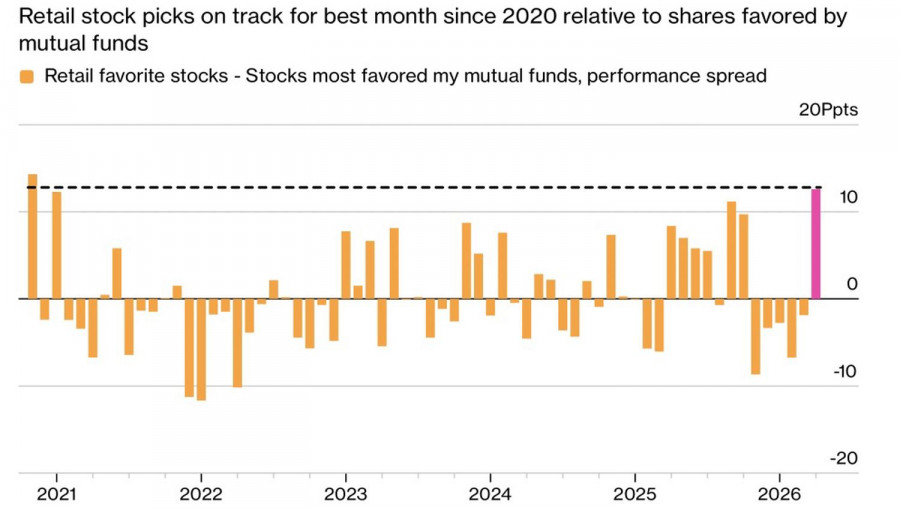
The crowd that missed the March bounce is returning to buying US stock indices. Evidence for that is the widest gap in demand since November 2020 between stocks preferred by retail investors and the shares being bought by mutual funds.
Dynamics of gap between crowd preferences and mutual funds
That means the market is reverting to the buy-the-dip strategy popular in 2025. Risks of a deeper pullback remain, though. Bloomberg warns that investors are focusing only on diplomacy and ignoring the fact that the Strait of Hormuz remains closed. The largest supply disruptions in history will keep oil elevated and increase stagflation risks for the US economy — a headwind for the S&P 500.
Still, investors plan to worry about that tomorrow. Today, they are encouraged by Trump's comments about a near-term US–Iran deal and the opportunity to buy stocks that got heavily marked down in March. Tech names are especially attractive: price-to-earnings ratios in the sector have fallen about 18% due to the correction, while earnings forecasts remain positive. In such conditions, buying looks highly compelling.
Nasdaq Composite performance
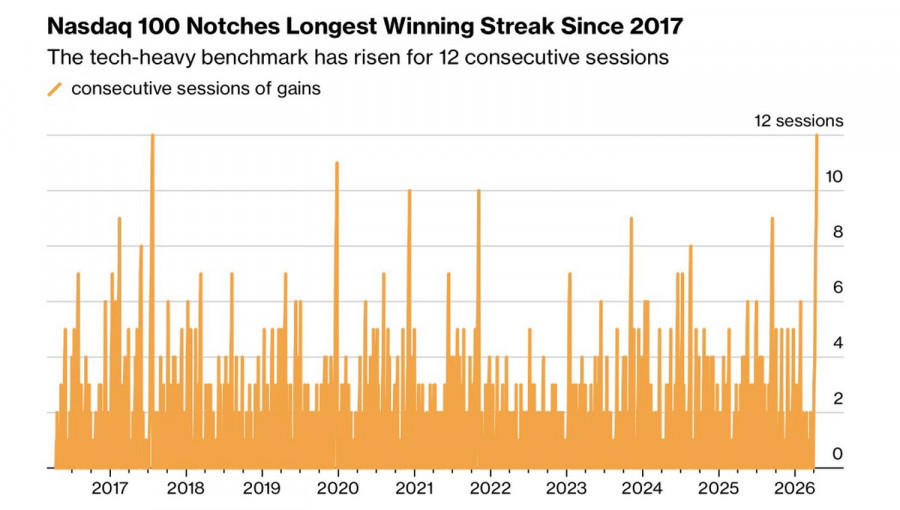
Unsurprisingly, against this backdrop, the Nasdaq Composite is posting its best winning streak since 2017, outperforming both the S&P 500 and the Dow Jones — a pattern typical of an AI-led technology boom.
All of this evokes animal spirits and FOMO, but it also smells like excess optimism, especially given Trump's claim that Iran agreed to all US demands, including full reopening of the Strait of Hormuz and cessation of nuclear activity.
However, Tehran has not confirmed the US president's statements and is not rushing to reopen the strait. Markets are buying the rumor of peace — but will they sell the fact if a deal is signed? Time will tell.
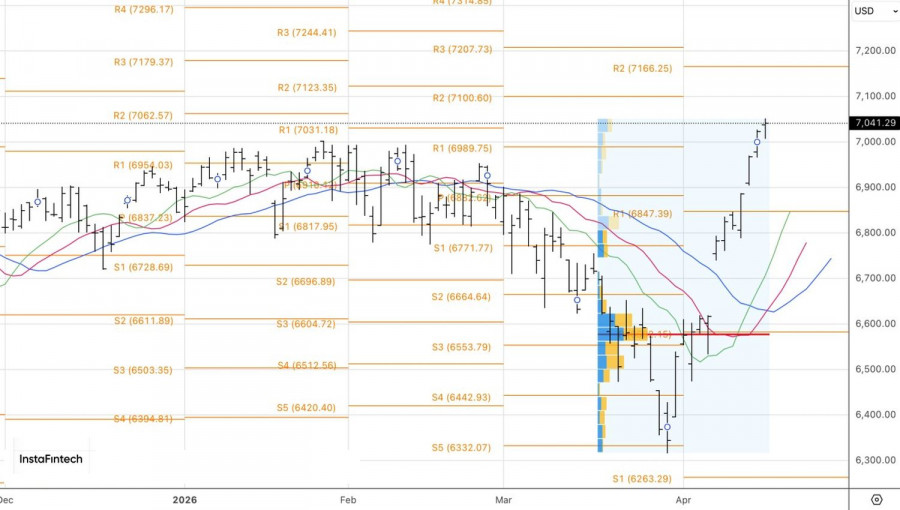
Technically, the S&P 500 formed a doji bar with a long lower shadow on the daily chart. A break above its high at 7,052 would increase the odds of a continued rally and justify adding to existing long positions. Conversely, a drop below the low at 7,007 would raise the chance of a pullback, opening the door for short-term selling toward the support levels of 6,955 and 6,880.
ForexMart is authorized and regulated in various jurisdictions.
(Reg No.23071, IBC 2015) with a registered office at First Floor, SVG Teachers Co-operative Credit Union Limited Uptown Building, Corner of James and Middle Street, Kingstown, Saint Vincent and the Grenadines
Restricted Regions: the United States of America, North Korea, Sudan, Syria and some other regions.





 コンタクトする