
The December Brent contract fell below $97 per barrel yesterday, losing almost 2% of the previous day's gain, while WTI traded around $89. This continued a series of alternating daily up-and-down moves in which traders have been stuck for several weeks. The fluctuations stem from conflicting signals about the restoration of oil flows from the Middle East, and current trading is built around those signals.
According to JPMorgan, crude shipments from the region have approached 98% of pre-war levels, while fuel deliveries have recovered noticeably less. This explains why the drop in crude prices is not accompanied by relief in refined-products markets, and why the diesel and gasoline shortage in the US continues to push refining demand up even as feedstock cheapens.
The spread between the two nearest WTI contracts narrowed to under $2 per barrel in backwardation on Thursday, versus $4.68 two weeks ago. The tightening spread indicates that the near-term supply shortfall is easing, so reports of increased flows through the Strait of Hormuz look broadly credible.
Goldman Sachs estimates that about 23 million barrels per day left the region last week via both Hormuz and alternative routes such as the Red Sea, matching last year's average.
However, the picture is not so unambiguously positive when looking at inventories. Experts note that exports from the Persian Gulf have been restored mainly thanks to escorted tanker passages and alternative routes, but oil stocks have fallen by more than 500 million barrels since February, leaving a thinner buffer against new disruptions. This is the key contradiction of September: production and export appear almost normalized, but the safety cushion in case of renewed escalation around Hormuz has thinned.
The geopolitical backdrop remains unresolved. Washington's and Tehran's talks on a durable peace agreement that would fully reopen the Strait of Hormuz have produced no results, and oil has risen for the third month on that backdrop. President Donald Trump said at the White House that the US fully controls the strait and will soon respond to Iran. Such rhetoric preserves a risk premium in prices, benefiting producers and Iran via higher export revenues but hurting importers and fuel consumers in the US and Europe.
The US domestic fuel market adds upward pressure from below. According to the report, distillate inventories are at the lowest seasonal level in EIA records, and gasoline stocks in the Midwest suffer from shortages that have reached record levels. This fuels demand for crude from refiners trying to maximize fuel output even as the feedstock price falls.
At the same time, Trump said he is weighing possible negative consequences of a diesel export ban for other fuel types, meaning a final decision on export restrictions has not been made, and the market is pricing in both scenarios simultaneously.
By the time this piece was prepared, oil had already returned to a sharp rise. WTI bounced from a low near $88.80 and traded around $92.50. In my view, the sharpness of today's rebound indicates the market is still not ready to fully believe in a sustainable restoration of Middle Eastern flows while inventories continue to be drawn down and the status of Hormuz remains unresolved. I do not rule out volatility persisting at least until clarity emerges on US export restrictions and the outcome of Washington-Tehran negotiations.
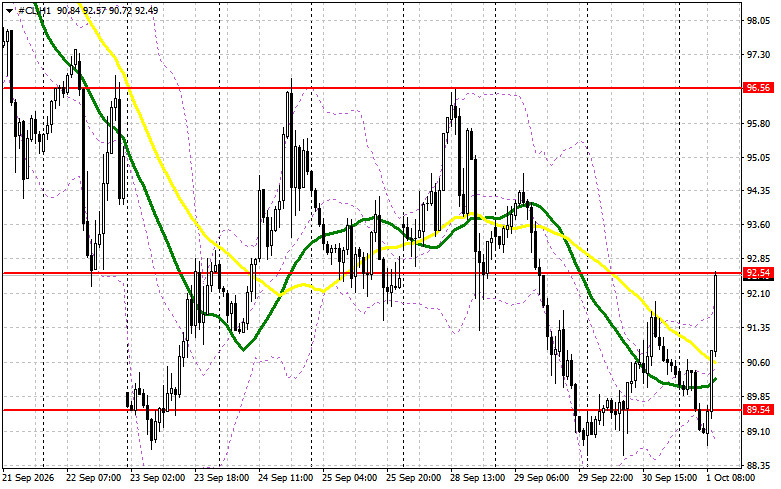
As for the current technical picture of oil, buyers need to take the nearest resistance at $92. That would allow targeting $96, above which a breakout will be quite difficult. The furthest target is the $100 area. In a downside scenario, bears will try to take control of $89. If they succeed, a break of the range will deliver a serious blow to bulls and push oil toward a low of $87, with a prospect of moving down to $83.

RYCHLÉ ODKAZY
ForexMart is authorized and regulated in various jurisdictions.
(Reg No.23071, IBC 2015) with a registered office at First Floor, SVG Teachers Co-operative Credit Union Limited Uptown Building, Corner of James and Middle Street, Kingstown, Saint Vincent and the Grenadines
Restricted Regions: the United States of America, North Korea, Sudan, Syria and some other regions.





 Kontaktujte nás