The report reflects a cooling of speculative optimism, while the geopolitical background enhances caution.
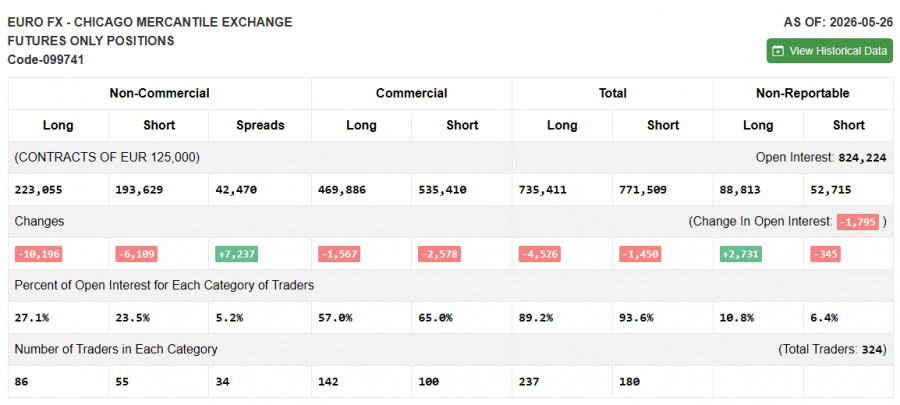
Open Interest: 824,224 contracts (each contract = €125,000). Decreased by 1,795 over the week.
Speculators maintain a net long position (+29,426), but have noticeably reduced their long positions over the week—longs fell by 10,196, which is double the reduction in shorts. This indicates profit-taking and a weakening of bullish momentum. At the same time, the sharp increase in spreads (+7,237) suggests that some participants are transitioning to neutral, hedging strategies—the market is taking a pause. Number of traders: 86 long / 55 short / 34 spreads.
Hedgers hold a net short position (-65,524), hedging against the risk of euro appreciation. Changes during the period are minimal—commercial participants have practically not changed their positions, indicating a lack of new strong corporate signals in either direction. Number of traders: 142 long / 100 short.
Small participants maintain a net long position (+36,098) and have increased long positions over the week—the retail sentiment regarding the euro remains bullish.
The report indicates a cooling of speculative optimism: large funds actively reduced longs (-10,196) while moderately closing shorts, causing the net position of Non-Commercial traders to decrease from +33,513 to +29,426. The sharp rise in spreads signals a shift to a wait-and-see strategy—participants are uncertain about the further direction and prefer to hedge. Commercial hedgers remained largely unchanged, indicating a lack of new corporate momentum. Overall, the outlook is neutral to bullish, but with clear diminishing confidence in the euro's growth.
The geopolitical backdrop increases caution: renewed tensions in the Middle East—threats of disruptions in shipping through the Red Sea and instability around Iran—fuel demand for the dollar as a safe haven, putting pressure on the euro.

RYCHLÉ ODKAZY
ForexMart is authorized and regulated in various jurisdictions.
(Reg No.23071, IBC 2015) with a registered office at First Floor, SVG Teachers Co-operative Credit Union Limited Uptown Building, Corner of James and Middle Street, Kingstown, Saint Vincent and the Grenadines
Restricted Regions: the United States of America, North Korea, Sudan, Syria and some other regions.





 Kontaktujte nás